
Understand the source.
The incoming water can change with the operation that produces it. A useful brief identifies its composition, variability and available flow, together with the intended reuse and the water-quality limits for that use.
Water solution
A full water reuse plan connects the available water, recovery treatment, storage and the next point of use. The design starts with the water quality and quantity available, then defines the quality the receiving application needs.
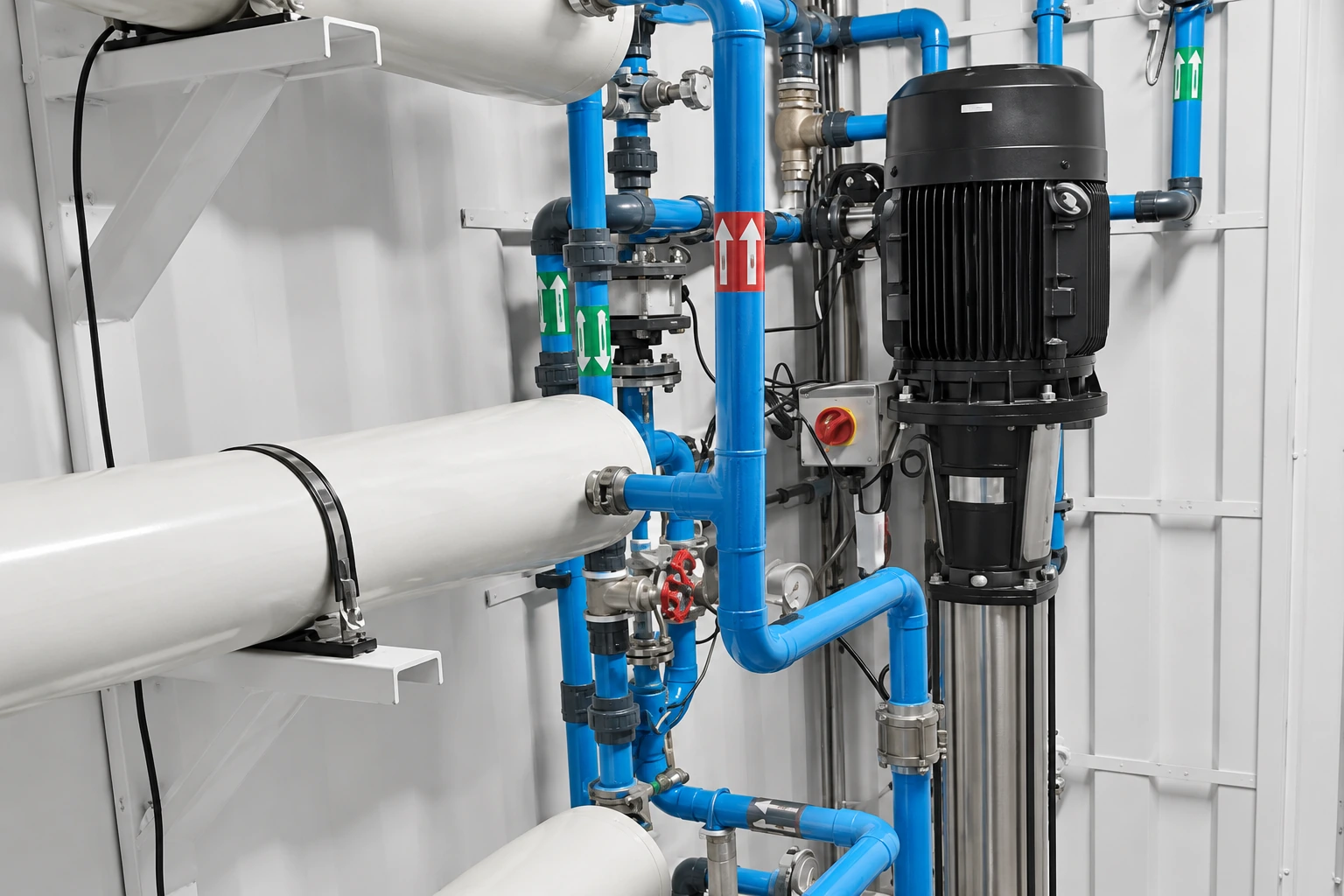
The incoming water can change with the operation that produces it. A useful brief identifies its composition, variability and available flow, together with the intended reuse and the water-quality limits for that use.
Treatment barriers, monitoring, storage and distribution are selected for the agreed application. Recovery, residual streams, maintenance and operating resources belong in the same design brief. The treatment sequence and achievable recovery are established for the project.
A clear design brief
Useful answers
It means planning how water can be recovered, treated and returned to a defined use. The incoming quality, required output and operating arrangements determine the treatment system.
No. The intended use must be specified. Any drinking-water application needs a separate suitability assessment, treatment design and verification; the reuse label alone establishes none of these.
No single technology defines the solution. Membranes may be one treatment step where the water analysis and required output justify them.
Start with the water
Your source, demand and intended use give our team a useful starting point.