Executive project brief
The challenge
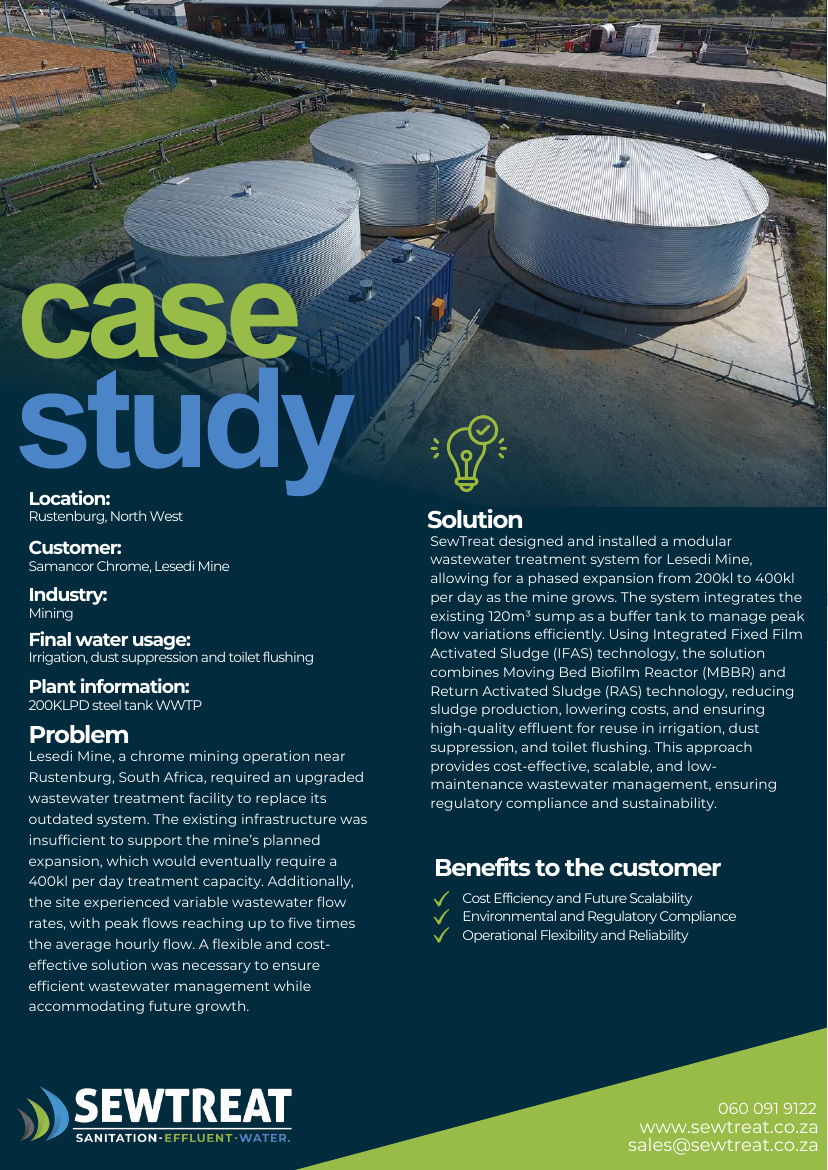
The chrome mine needed to replace outdated wastewater infrastructure while preparing for expansion. Variable wastewater flows reached up to five times the average hourly rate, making flexible buffering and scalable treatment essential.
Solution architecture
The following elements are documented in SewTreat’s published project record.
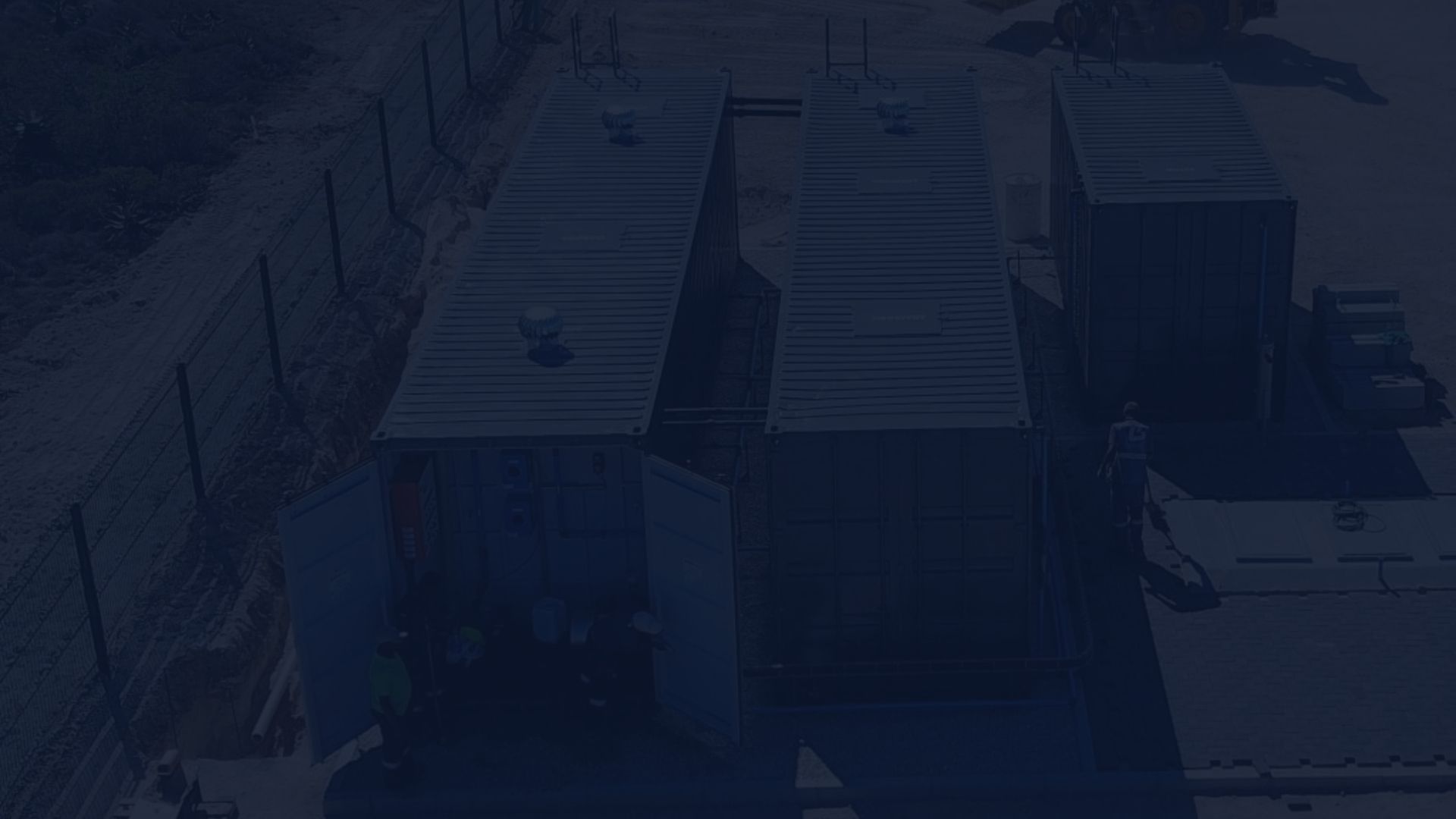
- Modular steel-tank wastewater treatment system
- Existing 120 m3 sump integrated as a peak-flow buffer
- Integrated Fixed Film Activated Sludge process combining MBBR and RAS
- Phased expansion strategy aligned with mine growth
Engineering assurance
Characterise
Validate the water profile, duty and variability.
Integrate
Define civils, power, controls, storage and existing interfaces.
Operate
Plan access, skills, residuals, consumables and maintenance.
Verify
Agree commissioning, sampling and acceptance evidence.
Published outcome
Phased expansion from a 200 KLPD installation toward the mine's planned 400 KLPD requirement.
What the project demonstrates
- Future scalability
- Operational flexibility
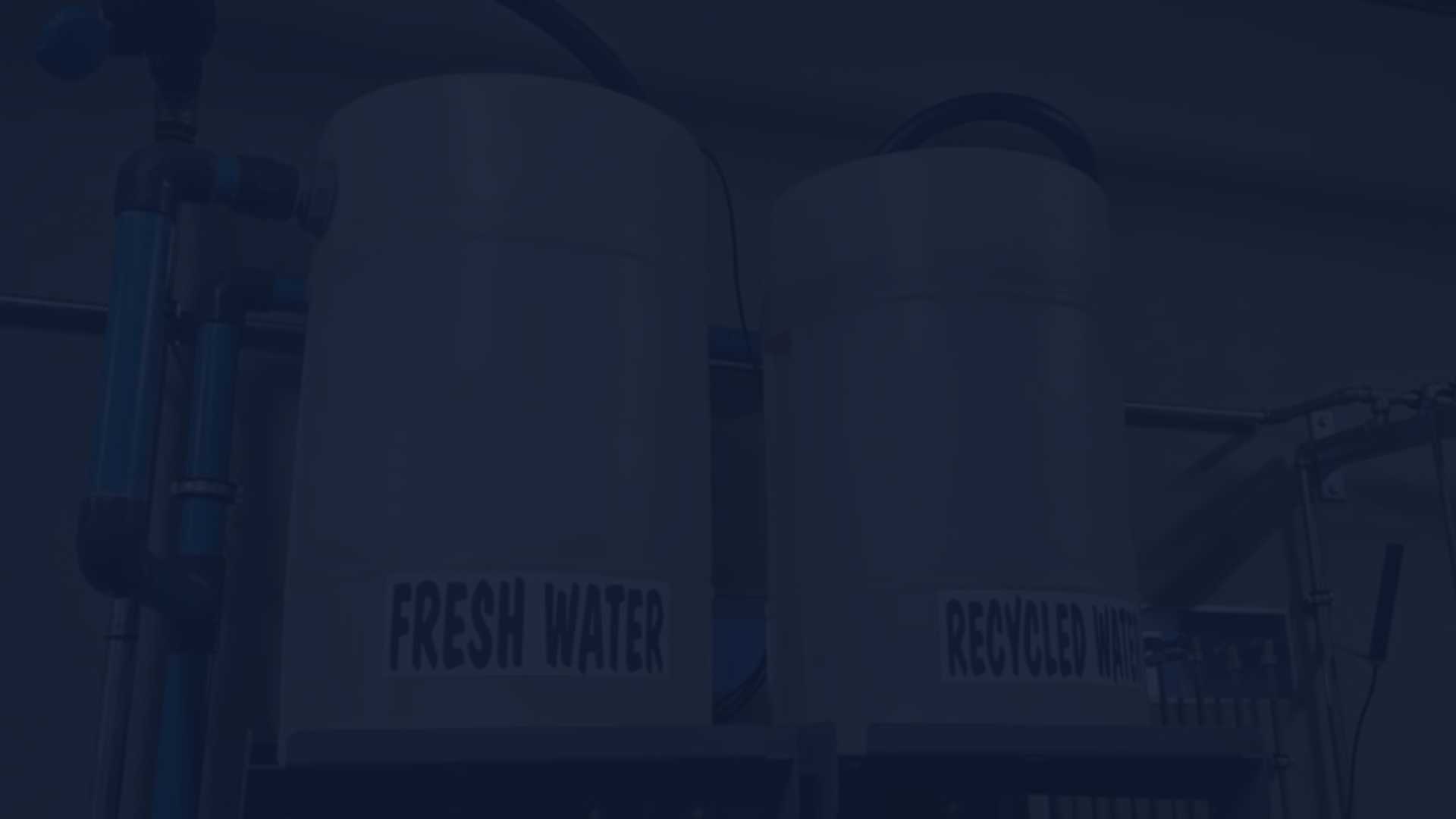
- Treated-water reuse
- Lower-sludge biological process
Before procurement
- Representative water analysis completed
- Average, peak and future flows validated
- Required standard and destination made explicit
- Civils, utilities, storage and distribution interfaces defined
- Operating and maintenance model resourced
- Commissioning evidence and acceptance criteria agreed
Source: Samancor Chrome Case Study. Financial and performance figures are attributed to SewTreat’s published case-study material.