
Executive project brief
The challenge
Mine expansion increased wastewater complexity, including solids, hydrocarbons and coal duff. Peak inflows during shift changes affected pH, retention and COD reduction.
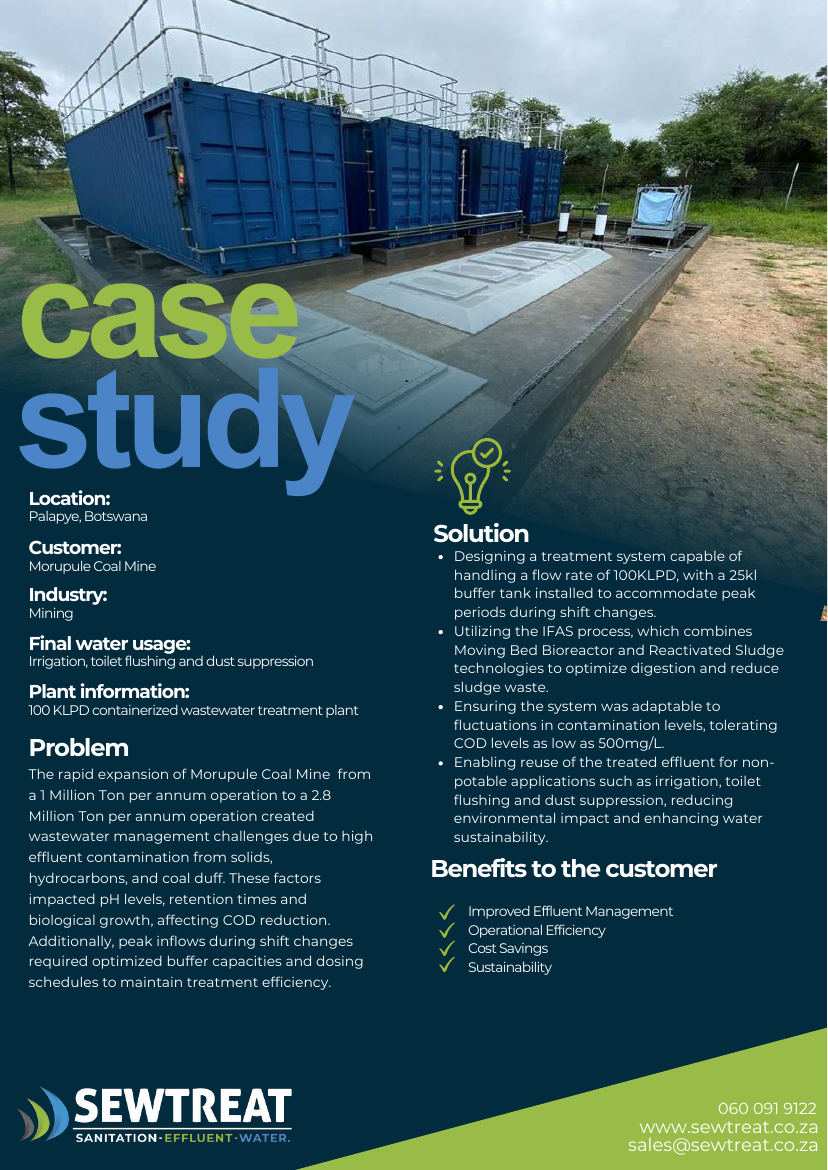
Hydraulic duty100 KLPD containerised wastewater plant
Water streamSanitation
Operating contextMining
Required destinationIrrigation, toilet flushing and dust suppression
Solution architecture
The following elements are documented in SewTreat’s published project record.
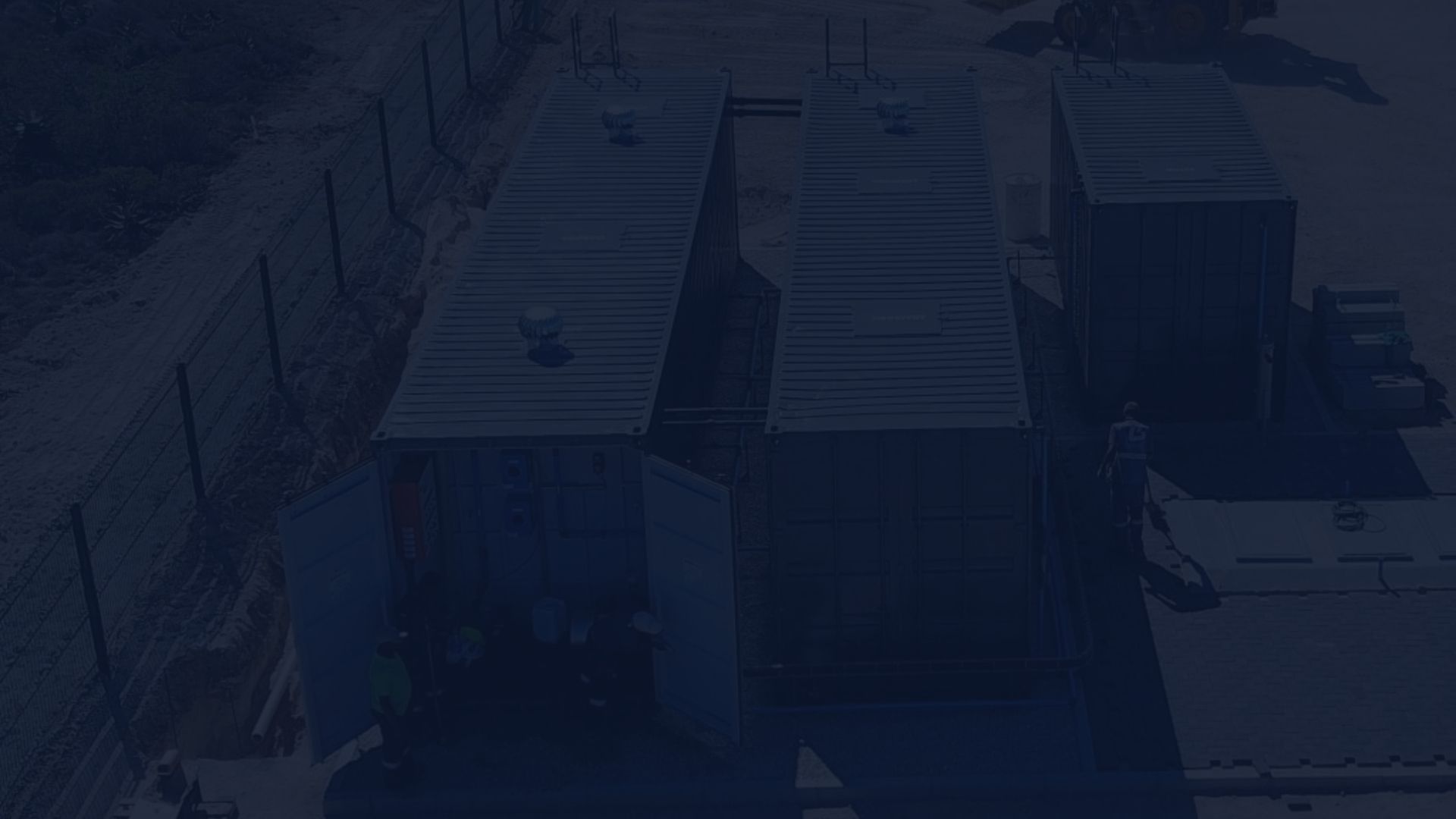
- 100 KLPD containerised plant
- 25 KL buffer tank for peak periods
- IFAS process combining moving-bed bioreactor and activated-sludge return
- Dosing and buffering configured around variable loads
Engineering assurance
Characterise
Validate the water profile, duty and variability.
Integrate
Define civils, power, controls, storage and existing interfaces.
Operate
Plan access, skills, residuals, consumables and maintenance.
Verify
Agree commissioning, sampling and acceptance evidence.
Published outcome
Treatment configured for variable contamination and peak flows during shift changes.
What the project demonstrates
- Improved effluent management
- Operational flexibility
- Non-potable reuse
- Reduced environmental demand
Before procurement
- Representative water analysis completed
- Average, peak and future flows validated
- Required standard and destination made explicit
- Civils, utilities, storage and distribution interfaces defined
- Operating and maintenance model resourced
- Commissioning evidence and acceptance criteria agreed
Source: Morupule Case Study. Financial and performance figures are attributed to SewTreat’s published case-study material.